The “Balut o Balot” Hijack: Turning a Religious Counter-Protest into a Viral Masterclass
The Mess
For years, the Valentine’s Day activation at Dangwa Flower Market was a corporate checkbox—generic brand ambassadors in standard uniforms handing out samples. It was “fine,” but it didn’t belong to the culture. It was an interruption, not a participant.
The Fix
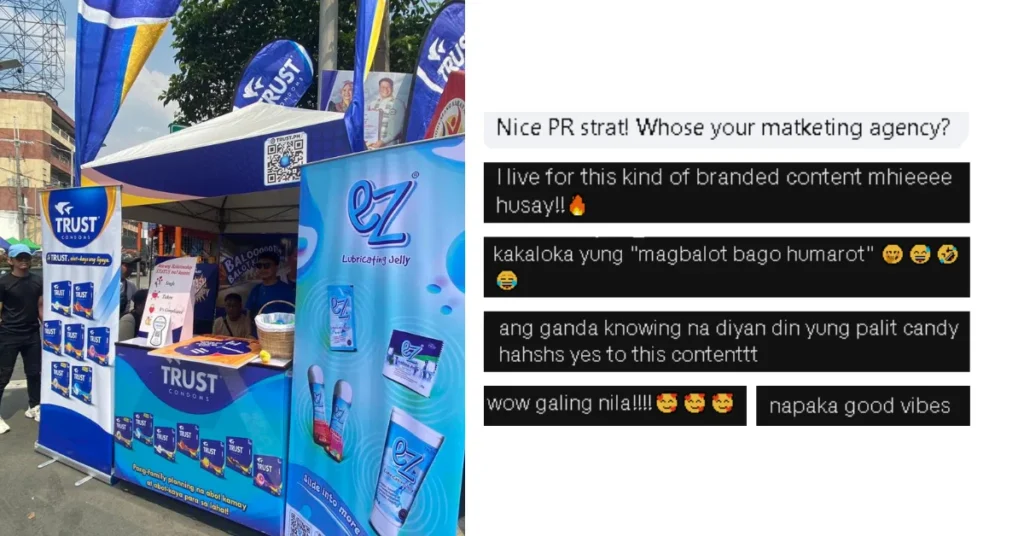
I looked at our current OOH (Out-of-Home) assets and saw a billboard featuring a balut vendor. Instead of running a separate event, I bridged the two. We ditched the usual brand ambassador uniforms and dressed them as balut vendors, carrying actual baskets. We leaned into the Pinoy pun: “Balut o Balot?” (The snack or the protection?). We weren’t just a condom brand anymore; we were a fixture of the market.
The Friction
The activation was so effective it triggered a pro-life counter-response. A group began intercepting our participants, taking the condoms we distributed and swapping them for candies.
The Harvest
Because our execution was culturally grounded and playful, the public and reaction shifted heavily in our favor. As the story hit social media, earned media took over. Netizens defended the brand, discussing the importance of protection, and commending the campaign’s playfulness.
The Results
What started as a sampling booth turned into a viral conversation, earning millions of organic views and transforming a routine event into a case study on cultural relevance.
This wasn’t about pulling a stunt; it was about cultural positioning.
Most brands think disruption is enough. It’s not. If you interrupt a space without understanding it, you’re just noise with a logo. The reason this worked wasn’t because of how the brand ambassadors were dressed differently, or because we gave free snacks. It worked because the idea was anchored in something familiar and local. “Balut o Balot?” wasn’t copywriting for cleverness’ sake — it was contextual and it belonged in Dangwa.
That cultural grounding is what earned insider status. We did not look like a company sampling condoms; we looked like we were part of the Valentine’s chaos.
And when friction came, the public stepped in.
That’s the real takeaway: when your strategy is rooted deeply enough in culture, you don’t have to defend the brand. The audience does it for you.
As a strategic brand builder and creative problem-solver, I bring 15 years of experience in brand management, team development, and fostering business relationships that drive lasting results.